

Strongest Adderall Alternative 2026: NeuroXen Report Maps OTC "Adderall Alternative" Search Behavior and a 5-Point Verification Framework
NeuroXen Editorial Report: "Strongest Adderall Alternative" Reflects Consumer Search Language in 2026 and Does Not Indicate Ranking, Endorsement, Equivalence to Adderall, or Product Effectiveness
Pacific Palisades, California, Jan. 15, 2026 (GLOBE NEWSWIRE) -- Disclaimer: This article is for informational purposes only and does not constitute medical advice. Always consult a qualified healthcare professional before starting any supplement. If you purchase through links in this article, we may earn a commission at no additional cost to you. This report does not recommend, replace, or provide alternatives to prescription medications like Adderall.
The phrase "Strongest Adderall Alternative 2026" is used solely to reflect common consumer search behavior and does not indicate a ranking, endorsement, medical equivalency, or product effectiveness.
The ongoing evolution of prescription stimulant medications continues to shape what consumers expect from "OTC alternatives." As Adderall availability fluctuates and prescribing criteria remain stringent, consumer search behavior around non-prescription cognitive support options has intensified heading into 2026.
This report explains what OTC options exist and provides a verification framework for evaluating them, without providing medical advice or substituting for prescription care. Readers can verify current label disclosures and published policies via View the current NeuroXen Super Brain offer (official NeuroXen page) before making any purchase decision.
Key Takeaways
- Adderall is a Schedule II controlled substance available only by prescription for diagnosed conditions such as ADHD.
- There are no FDA-approved over-the-counter medications that replicate Adderall's mechanism of action or prescription stimulant effects.
- Dietary supplements marketed for "cognitive support" fall under different regulations than drugs and can't claim to replicate prescription effects.
- This report provides a 5-point verification framework for evaluating any OTC product in this category and applies it to one product as a worked example.
View the current NeuroXen Super Brain offer (official NeuroXen page)
Why "Strongest" Is a Search Term, Not a Safe Buying Standard
When someone searches "strongest Adderall alternative," they are using language shaped by marketing—not medical reality.
Here's the truth: prescription medications have FDA-approved indications and require ongoing clinician oversight. No FDA-approved OTC medication replicates Adderall's mechanism. Dietary supplements are a separate category entirely, regulated under DSHEA with structure/function claim boundaries that prevent them from claiming prescription-level effects.
Understanding these distinctions is the first step toward making an informed decision rather than falling for marketing language.
What People Mean When They Search "Strongest Adderall Alternative"
The phrase pulls significant search volume year-round, with spikes during back-to-school season and early-year productivity planning. But what are people actually looking for?
Some searchers have used Adderall before and want options when they can't access prescriptions. Others have health conditions that rule out stimulant medications. Many are exploring non-prescription cognitive support. And a fair number do not fully grasp the difference between prescription drugs and dietary supplements.
If you're searching this phrase because prescriptions aren't accessible right now, you're not the only one. The key is separating "search language" from "medical reality."
When someone types "strongest Adderall alternative" into Google, they are usually expressing interest in cognitive support—not literally seeking a pharmaceutical equivalent available without a prescription. This report addresses that knowledge gap.
What Adderall Is (and Why It's Prescription-Only)
Adderall is classified as a Schedule II controlled substance under federal law. A licensed healthcare provider must evaluate you and write a prescription before you can access it.
The medication contains mixed amphetamine salts and is approved for treating attention deficit hyperactivity disorder (ADHD) and narcolepsy. It works by increasing dopamine and norepinephrine activity in the brain.
The Schedule II classification reflects Adderall's high potential for abuse and dependence. This means strict prescribing restrictions, refill limits, and required medical supervision.
Adderall carries significant contraindications: cardiovascular disease, hyperthyroidism, glaucoma, history of drug abuse, agitation, and MAO inhibitor use. These restrictions exist because the medication produces measurable physiological effects as a central nervous system stimulant.
No dietary supplement operates under this regulatory framework. No supplement can claim to produce equivalent effects.
What OTC Options Actually Exist (Prescription vs Dietary Supplement)
This is where consumer confusion runs deepest. There are two distinct categories relevant to this search:
Prescription medications require a doctor's evaluation and prescription. They have FDA-approved indications from clinical trials. Adderall, Vyvanse, Ritalin, and other ADHD medications fall into this category.
Dietary supplements are regulated under DSHEA. They do not require pre-market FDA approval for safety or efficacy. They can only make structure/function claims—not disease treatment claims or drug-equivalency claims.
These categories are not interchangeable. Searching for "Adderall alternatives" in the supplement aisle means looking in a fundamentally different product category.
What Dietary Supplements Can Legally Claim (DSHEA Reality Check)
Under the Dietary Supplement Health and Education Act (DSHEA), supplements cannot claim to diagnose, treat, cure, or prevent any disease.
What they can do is make "structure/function claims"—statements about how ingredients might support normal body functions. Those claims must include the standard FDA disclaimer.
Terms like "cognitive support," "mental clarity," and "focus support" are structure/function claims, not efficacy claims. They describe purported support for normal functions—not treatment for ADHD or prescription-equivalent effects.
Watch out for marketing language like "powerful," "maximum strength," and "clinically formulated." Those are marketing terms, not regulatory categories. Evaluate actual ingredient disclosures and available research, not label buzzwords.
The 5-Point Consumer Verification Framework (Use This on Any Product)
Before considering any OTC cognitive support product, verify these five factors:
1. Ingredient Disclosure and Blend Clarity
Look for products that disclose a complete Supplement Facts panel. When proprietary blends are used, recognize that individual ingredient dosages may not be specified, which represents a transparency limitation consumers should factor into their evaluation.
2. Stimulant Disclosure
Many supplements contain caffeine or caffeine-containing ingredients like green tea extract or guarana. Check for clear disclosure and compare against your personal tolerance.
3. Contraindication Acknowledgment
Reputable products state who should not use them: pregnant or nursing women, minors, people with specific health conditions, those on prescription medications.
4. Company Identity and Contact Information
Legitimate companies publish real contact information, business registration, and verifiable addresses. Anonymous websites warrant extra scrutiny.
5. Realistic Expectation Setting
Any company promising dramatic cognitive transformation is making claims they cannot legally support. Responsible companies acknowledge that results vary and supplements work alongside—not instead of—lifestyle factors and professional medical care.
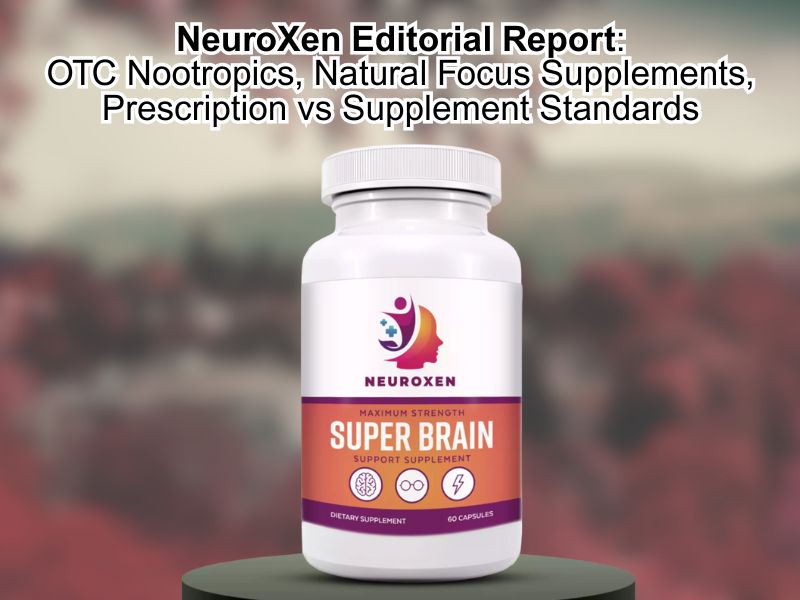
Applying the Framework: NeuroXen Super Brain (Based on Company Disclosures)
The following section summarizes publicly available company disclosures as an example of how consumers can apply the verification framework. The information is not independently tested or verified for this report.
1. Ingredient Transparency
According to the company's published Supplement Facts panel, NeuroXen Super Brain lists individual vitamins and minerals with amounts and includes a proprietary blend disclosed by total weight (651 mg), though individual ingredient dosages within that blend are not specified.
The company lists vitamins including Vitamin A, Vitamin C, Vitamin E, Thiamine, Riboflavin, Vitamin B6, Folate, Biotin, and Pantothenic Acid. Minerals listed include Choline, Calcium, Iron, Magnesium, Zinc, Selenium, Copper, Manganese, Chromium, Molybdenum, and Potassium.
The proprietary blend is listed as containing: DMAE Bitartrate, L-Glutamine, Glutamic Acid, Green Tea Leaf Extract, Bacopa monnieri Extract, Inositol, N-Acetyl L-Tyrosine, Bilberry Fruit Extract, Ginkgo Biloba Extract, Grape Seed Extract, Alpha Lipoic Acid, GABA, and Huperzine A. Individual amounts for these ingredients are not disclosed on the label.
2. Stimulant Disclosure
According to the company's published ingredient list, the formula contains Green Tea Leaf Extract. Green tea naturally contains caffeine, though the exact caffeine content per serving is not specified on the label. Consumers sensitive to stimulants should note this inclusion.
3. Contraindication Acknowledgment
According to the company's published caution statement, NeuroXen Super Brain should not be used without consulting a healthcare provider if you have: epilepsy, Alzheimer's disease, diabetes, high blood pressure, or kidney disease. The caution also applies to pregnant or nursing mothers, children under 18, and individuals with known medical conditions or those taking medications.
4. Company Transparency
According to publicly available information, the company publishes contact information including phone number, email address, and a physical address in Pacific Palisades, California.
Phone: (786) 432-9703 Email: info@getneuroxen.com Address: 17838 Castellammare Dr, Pacific Palisades, CA 90272
5. Expectation Setting
The product is positioned as a dietary supplement for general wellness. According to standard FDA requirements, the label must include the disclaimer that statements have not been evaluated by the FDA and the product is not intended to diagnose, treat, cure, or prevent any disease.
Product Format (Manufacturer Disclosures)
The manufacturer lists the following product specifications:
- 60 capsules per container
- Suggested use: two capsules daily with water
- Timing: 20 to 30 minutes before a meal or as directed by a healthcare professional
Return Policy (Manufacturer Disclosures)
The manufacturer lists a published return policy. Readers should verify current terms directly on the official NeuroXen website before purchasing.
Whether this product meets individual needs is something consumers must evaluate based on their own circumstances and guidance from a qualified healthcare professional. The key verification point is that consumers can read these disclosures before making a decision.
Readers can verify current label disclosures and the company's published policies via View the current NeuroXen Super Brain offer (official NeuroXen page) to confirm current terms before making any purchase decision.
Safety and Interaction Considerations (When to Talk to a Clinician)
Any product containing stimulant ingredients or compounds that may affect neurotransmitter function carries considerations for specific groups.
If you have cardiovascular conditions, high blood pressure, or heart rhythm concerns—talk to your healthcare provider first.
Caffeine and stimulant ingredients can worsen anxiety in sensitive people. If you have anxiety disorders or stimulant sensitivity, proceed carefully.
Pregnant and nursing women should avoid cognitive supplements unless specifically cleared by a healthcare provider.
Cognitive supplements are formulated for adults. Minors should not use them without healthcare provider guidance.
Many prescription medications interact with supplement ingredients. If you are on any prescriptions—especially for ADHD, depression, blood pressure, or diabetes—talk to your doctor before adding supplements.
The universal recommendation: anyone considering a cognitive support supplement should discuss it with a healthcare provider first. This is especially important for anyone with a diagnosed condition or anyone taking prescription medications.
FAQ: Strongest Adderall Alternative 2026 (Search Intent Answers)
Is there an OTC substitute for Adderall?
No. Adderall is a prescription medication with specific mechanisms, regulatory classification, and efficacy data. No FDA-approved OTC medication replicates its effects. Dietary supplements are a separate category entirely and cannot claim to substitute for prescription medications.
What's the difference between prescription drugs and supplements?
Prescription drugs require a doctor's evaluation and have FDA-reviewed efficacy data from clinical trials. Supplements are regulated under DSHEA without pre-market FDA approval for safety or efficacy and can only make structure/function claims—not treatment claims.
Are dietary supplements regulated?
Yes, but differently than drugs. The FDA regulates supplements under DSHEA, requiring manufacturing standards and truthful labeling—but not pre-market approval for safety or efficacy.
Can supplements treat ADHD?
No. ADHD is a medical condition requiring evaluation and treatment by qualified healthcare providers. Dietary supplements cannot claim to treat any diagnosed condition, including ADHD. Individuals with ADHD should work with licensed healthcare professionals.
What should I look for when evaluating any cognitive supplement?
Complete ingredient transparency, stimulant disclosure, contraindication acknowledgment, company identity and contact information, and realistic expectation setting. The 5-point framework covers all of these.
How does NeuroXen compare to other products?
This report does not compare products or make recommendations. According to the company's disclosures, NeuroXen Super Brain publishes ingredient lists, a caution statement, and contact information. Consumers can evaluate these factors against other products using the 5-point framework. The information is based on company disclosures and is not independently verified for this report.
Conclusion: How to Evaluate OTC Options Without Falling for Hype
The search phrase "strongest Adderall alternative" reflects consumer interest in cognitive support—but the language itself is shaped by marketing, not medical reality.
The prescription medications for attention-related conditions—Adderall, Vyvanse, Ritalin, and others—are Schedule II controlled substances with clinical trial data, requiring healthcare provider evaluation and supervision.
Dietary supplements are a separate category. Different regulations, different compounds, no ability to claim prescription-level effects. Think of supplements as routine-support tools, not prescription substitutes. But consumers can still evaluate them using objective criteria: transparency, ingredient disclosure, contraindications, company credibility, and realistic expectations.
This report provided a 5-point framework and applied it to NeuroXen Super Brain as a worked example based on company disclosures. Readers can verify current terms and label disclosures via View the current NeuroXen Super Brain offer (official NeuroXen page) to read published policies before making any decision.
Healthcare provider consultation remains the smart first step before starting any supplement—and the essential step for anyone with diagnosed conditions or concerning symptoms.
Disclaimer
No Medical Substitution: This report does not recommend, endorse, or provide alternatives to prescription medications including Adderall. No dietary supplement substitutes for prescription medication. Consult a healthcare provider about appropriate medical interventions.
FDA Health Disclaimer: These statements have not been evaluated by the Food and Drug Administration. Dietary supplements are not intended to diagnose, treat, cure, or prevent any disease. Consult your physician before starting any supplement.
Professional Medical Disclaimer: This article is educational and does not constitute medical advice. No dietary supplement substitutes for prescription treatment. Consult your physician before starting any supplement, especially if you have health conditions or take medications.
Results May Vary: Individual results vary based on age, health, lifestyle, genetics, medications, diet, exercise, and other factors. No results are guaranteed.
FTC Affiliate Disclosure: This article contains affiliate links. We may earn a commission at no additional cost to you. This does not influence the information presented.
Pricing and Availability: All pricing and policy references are based on publicly available disclosures at publication (January 2026) and may change. Verify current details on official websites.
Company Disclosure Context: Product information in this report is based on company disclosures and is not independently tested or verified. Consumers should conduct their own due diligence.
How This Report Was Prepared
This report was prepared using the following methodology:
- Ingredient information was sourced directly from the manufacturer's published Supplement Facts panel and product labeling
- Category statements (prescription vs. supplement) reflect established regulatory distinctions under FDA and DSHEA frameworks
- No laboratory testing or independent verification was performed for this report
- Product information is based on company disclosures and publicly available materials
- Readers should consult a licensed healthcare provider before starting any supplement
This report does not evaluate product effectiveness, verify manufacturer claims, or provide medical recommendations.
About This Report
This analysis provides educational information about consumer search behavior related to "Adderall alternatives" and verification criteria for OTC products. It does not constitute medical advice or product endorsement. Healthcare provider consultation is recommended before starting any supplement.
Contact: NeuroXen, Pacific Palisades, California Email: info@getneuroxen.com Phone: (786) 432-9703

Email: info@getneuroxen.com
Phone: (786) 432-9703

Legal Disclaimer:
EIN Presswire provides this news content "as is" without warranty of any kind. We do not accept any responsibility or liability for the accuracy, content, images, videos, licenses, completeness, legality, or reliability of the information contained in this article. If you have any complaints or copyright issues related to this article, kindly contact the author above.
